
Skip to content
ROGGERBAX

Protect · Optimize · Engineer

Your business should grow. Not your operating overhead.

RoggerBax connects disconnected systems, automates repetitive work and engineers security into your operations—so your technology supports growth instead of slowing it down.

Book a 30-minute call – Booking opens Google Calendar.Fixed-price security & compliance services

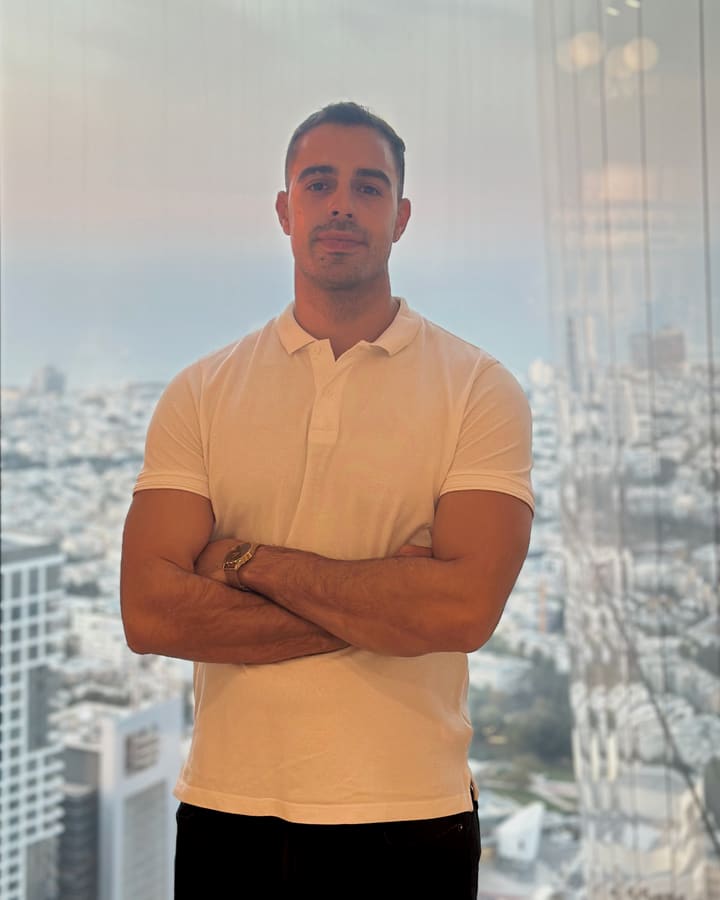
Eliyah Lahiani, founder of RoggerBax, standing by a window above the city
Eliyah LahianiFounder, RoggerBaxCybersecurity · Privacy · Enterprise Architecture · EngineeringLinkedIn profile of Eliyah Lahiani
  • Reduce unnecessary operating costs
  • Improve security and compliance readiness
  • Automate repetitive work
  • Improve agility and business capacity

Founder expertise and credentials

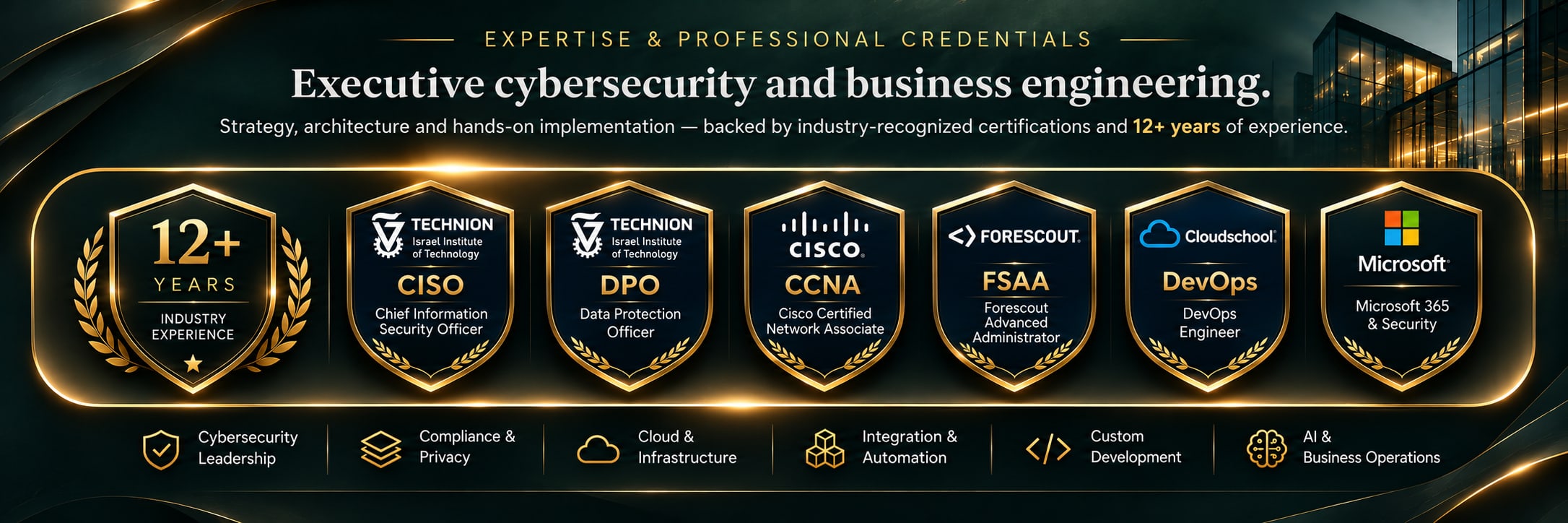
Expertise and professional credentials: executive cybersecurity and business engineering, 12+ years of industry experience. Badges: Technion CISO; Technion DPO; Cisco CCNA; Forescout FSAA; Cloudschool DevOps Engineer; Microsoft 365 and Security.
Eliyah Lahiani, Founder, RoggerBaxCertifications: Cisco CCNA, Forescout FSAA.Training: Technion CISO programme, Technion DPO programme, Cloudschool DevOps.Expertise: Microsoft 365 and security, compliance and privacy, cloud and infrastructure, integration and automation, custom development, AI and business operations.

Architecture first. Tools second. Business outcomes always.

Better architecture. Less waste. More capacity.

We combine the technology you already own with carefully selected open-source platforms, custom software and AI automation—built around your budget, business goals and compliance requirements.

Need continuing senior ownership instead?How a partnership worksDiscuss an annual partnership

How it fits together

From fragmented software to an intelligent business operating model

Seven steps from disconnected applications to a coordinated, governed organization.

Before: fragmented systems
Diagram: From fragmented software to an intelligent business operating modelEight business systems sit scattered and tilted, joined only by a few thin dashed lines.Employee workspacesGoogle WorkspaceMicrosoft 365Identity, permissions and governanceShared business contextERP coreIntegration layerException queueMicro-SaaSApprovalsEvidence and audit trailLeadership reportingRiskCostPerformanceHumanapprovalProposedAwaitingapprovalApprovedCompletedSalesFinanceOperationsSecurity / ComplianceCRMEmail anddocumentsFinanceapplicationsSpreadsheetsProject toolsLegacy softwareCloud servicesVendor SaaSSales AgentFinance AgentOperations AgentSecurity / Compliance AgentDiagram: From fragmented software to an intelligent business operating modelEight business systems sit scattered and tilted, joined only by a few thin dashed lines.Google WorkspaceMicrosoft 365Permissions and governanceShared business contextERP coreMicro-SaaSEvidence and audit trailLeadership reportingHuman approvalSalesFinanceOperationsSecurityCRMEmail and docsFinance appsSpreadsheetsProject toolsLegacysoftwareCloud servicesVendor SaaSSales AgentFinance AgentOperations AgentSecurity Agent
Executive Operations Copilot

CEOCan we take on another customer project without increasing headcount?

  • Delivery capacityTwo engineers free from week 3
  • Existing commitmentsFour projects on schedule
  • Financial constraintsWithin the quarter's budget
  • Operational riskOne supplier dependency
  • Security requirementsCustomer review needs two controls
  • DependenciesFinance sign-off on the revised plan
  • Data freshnessCRM, ERP and project tools, synced today

Yes, from week 3, if the supplier dependency is resolved first.

CEOPrepare a better allocation of next week's work.

  1. Proposed
  2. Reviewed
  3. Approved
  4. Executed

Lower operational friction. Better control. More productive teams. Greater capacity for growth.

Illustrative example with fictional data. Not a connected product.

Illustrative model. It shows an approach, not a client project or a measured result. Illustrative scenario: a new tender arrives: A simulation of how one piece of work could move through this operating model. It is not connected to any live system or customer data.

  1. Step 1 of 7 · The problem

    Fragmented systems

    Each tool was a sensible purchase. Together they are not a system.

    How it works

    CRM, finance applications, spreadsheets, email, project tools, legacy software and vendor SaaS each hold part of the picture. Data moves between them by hand.

    In the diagram: Dashed lines: data that moves by hand.

  2. Step 2 of 7 · The problem

    Underutilized technology

    You already pay for capability nobody uses.

    How it works

    The same record is kept in several places, steps are repeated, and features that were paid for sit unused because nobody owns them.

    In the diagram: Hollow bar segments: unused capability. Double sheets: duplicate records.

  3. Step 3 of 7 · The problem

    Vendor and operational gaps

    One piece of work has to cross four departments by hand.

    How it works

    A new opportunity needs a budget check, delivery capacity and security evidence. Each hand-off between Sales, Finance, Operations and Security is an email, a spreadsheet or a meeting.

    In the diagram: Dashed arcs with a person: manual hand-offs between departments.

  4. Step 4 of 7 · Protect

    Coordinated architecture

    Every system gets an owner, a boundary and a place.

    How it works

    We map the systems and the data in them, agree who owns each one, and set the access and trust boundaries around them. An ERP core becomes the operational foundation. Specialist systems that work well stay as systems of record and connect to it through controlled interfaces.

    In the diagram: Gold tabs: named owners. Dashed frame: the governance boundary.

  5. Step 5 of 7 · Optimize

    Integration and automation

    Connect what you have. Automate what people re-key.

    How it works

    Defined integrations link each system to the core. Small purpose-built applications (micro-SaaS) cover the gaps, with validation, approvals and an exception queue. People keep working in Google Workspace or Microsoft 365, which become the familiar front end, not a replacement for the ERP.

    In the diagram: Solid lines: defined integrations. The moving line: an automated flow.

  6. Step 6 of 7 · Protect + Optimize

    Consolidated governance and reporting

    The more that is automated, the more that is recorded.

    How it works

    Role-based permissions, human approval points and policy checks sit across every workflow. Each step leaves an audit record, so evidence for audits, compliance readiness and tender preparation is collected as ordinary work happens. Leadership reports from one picture.

    In the diagram: Check marks: policy checks. Squares below: recorded workflow events.

  7. Step 7 of 7 · Engineer

    Governed, agent-assisted operations

    Department agents work inside the same rules as people.

    How it works

    Sales, Finance, Operations and Security agents share a permission-controlled business context. They can retrieve permitted records, propose and coordinate actions and prepare documents. Actions that need authority wait for a named person, run through constrained tools and are recorded as evidence.

    In the diagram: Gold badges: department agents. Every action passes the approval gate.

  1. Step 7 of 7 · Chain 1 of 7

    Sales

    Proposed

    How it works

    The opportunity is captured in the CRM with its requirements, and an internal assessment is requested.

  2. Step 7 of 7 · Chain 2 of 7

    Finance Agent

    Proposed

    How it works

    Checks budget assumptions, commercial constraints and which approvals are required.

  3. Step 7 of 7 · Chain 3 of 7

    Operations Agent

    Proposed

    How it works

    Reviews delivery capacity, dependencies and proposed milestones.

  4. Step 7 of 7 · Chain 4 of 7

    Security / Compliance Agent

    Proposed

    How it works

    Identifies the controls and customer-assurance requirements that apply to this customer, and flags evidence that is missing.

  5. Step 7 of 7 · Chain 5 of 7

    Human approval

    Approval

    How it works

    A designated, authorized person reviews the proposed action and approves or rejects it. Nothing is executed before this.

  6. Step 7 of 7 · Chain 6 of 7

    Controlled execution

    Completed

    How it works

    Once approved, the workflow updates the ERP, CRM and project systems through constrained tools and writes an auditable event record.

  7. Step 7 of 7 · Chain 7 of 7

    Business outcome

    Outcome

    How it works

    Leadership sees one coordinated view of the work.

    Commercial status
    Response approved to submit
    Delivery readiness
    Capacity confirmed for the proposed milestones
    Outstanding risk
    One supplier dependency, with a named owner
    Required evidence
    Missing items requested from their control owners
    Next authorized action
    Send the response, by the named sales lead

Illustrative scenario: a new tender arrives

A simulation of how one piece of work could move through this operating model. It is not connected to any live system or customer data.

  1. ProposedSalesThe opportunity is captured in the CRM with its requirements, and an internal assessment is requested.
  2. ProposedFinance AgentChecks budget assumptions, commercial constraints and which approvals are required.
  3. ProposedOperations AgentReviews delivery capacity, dependencies and proposed milestones.
  4. ProposedSecurity / Compliance AgentIdentifies the controls and customer-assurance requirements that apply to this customer, and flags evidence that is missing.
  5. ApprovalHuman approvalA designated, authorized person reviews the proposed action and approves or rejects it. Nothing is executed before this.
  6. CompletedControlled executionOnce approved, the workflow updates the ERP, CRM and project systems through constrained tools and writes an auditable event record.
  7. OutcomeBusiness outcomeLeadership sees one coordinated view of the work.
Commercial status
Response approved to submit
Delivery readiness
Capacity confirmed for the proposed milestones
Outstanding risk
One supplier dependency, with a named owner
Required evidence
Missing items requested from their control owners
Next authorized action
Send the response, by the named sales lead

Illustrative scenarios

Architecture that solves more than one problem.

The strongest solution isn't always another subscription. We design around your existing systems, security requirements and economics.

Illustrative scenario

Budget-smart security architecture

  1. BeforeSiloed tools, separate consoles, manual evidence.
  2. Architecture decisionKeep what works, add open-source Wazuh, assign owners.
  3. AfterOne view of events. Evidence in one place.

Business outcome: More control. Less unnecessary complexity. Better evidence visibility.

Full explanation

Before

  • Multiple security vendors with overlapping features
  • Logs fragmented across tools
  • Repetitive manual control work
  • Little visibility of evidence

Architecture decision

  • Review what you already pay for before buying more
  • Consolidate overlapping capabilities where the review justifies it
  • Evaluate open-source options such as Wazuh for monitoring and configuration assessment
  • Automate evidence collection; document owners and running costs

After

  • More coherent security visibility
  • Better evidence readiness
  • Less unnecessary duplication, where validated
  • Explicit operational ownership

Open-source tooling complements, and does not automatically replace, every commercial control, and it does not by itself deliver certification.

Discuss your security architecture

Illustrative scenario

Compliance-oriented Infrastructure as Code

  1. BeforeCUI spread out, hand-built servers, no clear boundary.
  2. Architecture decisionScope the CUI. Build the enclave as code.
  3. AfterDefined scope, reproducible build, traceable evidence.

Business outcome: Repeatable infrastructure. Clearer scope. Stronger compliance readiness.

Full explanation

Before

  • A defense supplier with an unclear CUI boundary
  • Security configurations that differ across environments
  • Manually built infrastructure
  • Evidence that is hard to collect

Architecture decision

  • Define CUI assets, security protection assets and what is out of scope
  • Design a segmented environment; use cloud services that meet FedRAMP Moderate or equivalent where they store or process CUI
  • Use Terraform to make infrastructure configuration repeatable
  • Add identity, network, logging and evidence controls; define external-provider responsibilities
  • Validate backup and recovery; document the SSP and implementation evidence

After

  • Better-defined assessment scope
  • Reproducible configuration
  • Improved control visibility
  • More maintainable compliance-readiness infrastructure

Segmentation and Infrastructure as Code support CMMC readiness but do not by themselves establish compliance. The CMMC assessment itself is performed independently and is outside this illustration.

Discuss CMMC readiness

Illustrative scenario

ERP, business automation and governed AI

  1. BeforeRecords disagree. Handoffs are manual. Requests wait.
  2. Architecture decisionOne set of records. AI within set permissions.
  3. AfterThe CEO asks. A grounded answer arrives for review.

Business outcome: Faster decisions. More productive teams. Greater capacity for growth.

Full explanation

Before

  • Finance, sales and operations keep separate records
  • Workspace or Microsoft 365 workflows are disconnected
  • ERP data is stale
  • Leadership waits for manual reports
  • A new customer request waits on manual handoffs

Architecture decision

  • Integrate ERP, CRM and collaboration platforms around canonical records with named owners
  • Consolidate overlapping SaaS where it removes cost or handoffs
  • Build small custom applications only where no existing tool fits
  • Automate approvals and validation, with role-based access, logs and data-freshness checks
  • Connect permission-bounded AI agents to approved tools, with human approval

After

  • Better-coordinated workflows
  • Consolidated management information
  • Less repetitive data handling
  • Human-approved automation and better-supported decisions
  • A capacity question answered from authorized records, with a proposal for leadership to review

AI model providers are assessed as interchangeable components; this illustration does not describe a specific deployment or integration.

Discuss an engineering project

Illustrative scenarios that show how we approach a problem. They are not client projects, deployments or measured results.

Fixed-price specialist services

Defined scope. Fixed price. Senior-led delivery.

For a well-defined security or compliance need, start with a fixed-price engagement. The price covers the scope stated on each card.

  • ISO/IEC 27001 Readiness

    $20,000USD · fixed, one standard

    Companies whose customers or tenders require ISO/IEC 27001 and that need a clear path to a certification audit.

    Core deliverables

    • Initial gap assessment against ISO/IEC 27001:2022
    • ISMS scope, risk method and Statement of Applicability support
    • Documentation and evidence requirements
    • Prioritized implementation plan and readiness handover
    Full scope, assumptions and exclusionsDiscuss ISO 27001 readiness
  • SOC 2 Type II Readiness & Support

    $30,000USD · fixed, one system

    B2B software companies whose customers ask for a SOC 2 Type II report and that need controls, owners and evidence ready before the observation period.

    Core deliverables

    • Scope and readiness assessment against the selected Trust Services Criteria
    • Control-gap mapping and remediation roadmap
    • Policy and evidence preparation, with evidence owners and collection design
    • Capped support through an agreed observation-period preparation window, including auditor coordination within the written scope
    Full scope, assumptions and exclusionsDiscuss SOC 2 Type II support

Materially different scope (more entities, sites or systems, or a different standard) is quoted in a separate written proposal. RoggerBax provides readiness and support. Certification is decided by an accredited certification body, and SOC 2 examinations are performed by an independent licensed CPA firm. See all specialist services

How it works

  1. Step 1: First discussion

    What needs to change, the deadline and what has been tried. A direct answer on fit, including when the answer is no.

  2. Step 2: Written scope

    Scope, deliverables, duration, owners and price agreed before work begins.

  3. Step 3: Delivery

    Led by the senior practitioner you met, in your environment, with your team.

  4. Step 4: Handover or continue

    You keep every output. Continue with a partnership or a next project only if it makes sense.

Questions we are asked before the first call

Which engagement is right for us?

Start with the decision in front of you. A defined need, such as a customer security review or a readiness assessment, suits a specialist engagement. Continuing senior ownership suits an annual partnership. A capability to build suits an engineering project. If a smaller scope fits, we will say so.

Is this advisory, or do you also implement?

Both are available as separate engagements. An assessment is advisory and produces a prioritized plan. Where useful, senior engineers work alongside your team on implementation and validation, and engineering projects run through to handover.

Do you resell software or take referral fees?

No. There are no reseller agreements, referral fees, or vendor partnerships behind any recommendation.

What happens after I send the form?

We reply by email to arrange a time. If you prefer, you can also book a 30-minute call directly in the calendar.

Do you only work with organizations in San Diego?

No. ROGGERBAX serves organizations across San Diego and the United States.

Tell us what needs to change.

Tell us your deadline and current situation. You will get a direct answer on whether this is a fit — at no charge and with no obligation.